3 Oct 2023
Healthy Bumps: Pregnancy Nutrition
As expecting mothers, your dietary needs evolve throughout each trimester, making it essential to provide your body with the right nutrients […]
Blog / Article

22 Apr 2026
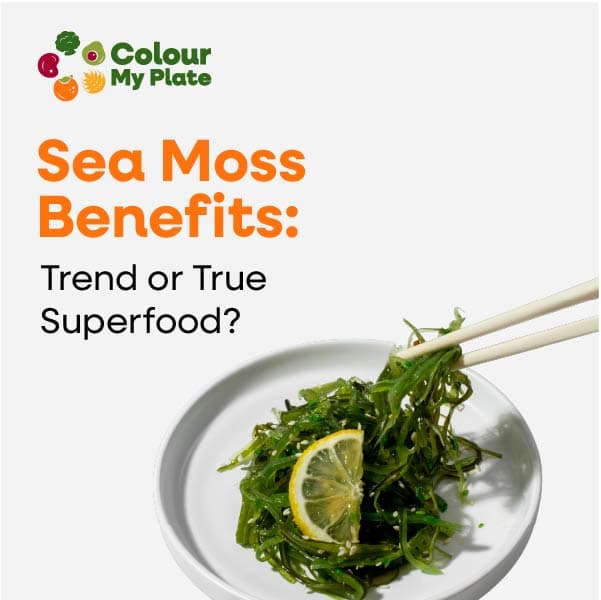
It’s in smoothies, skincare routines, and wellness content feeds everywhere. Sea moss (also known as Irish moss or Chondrus crispus) has gone from an obscure red algae to a billion-dollar supplement industry almost overnight. But when something gets this popular this fast, it’s worth asking: is the science actually keeping up?
Here’s an honest breakdown.
Sea moss is a type of red seaweed that grows along the rocky Atlantic coastlines of North America and Europe. It’s low in calories, fat, and sugar, gluten-free, and a decent source of vitamins and minerals — including vitamins A, C, E, and several B vitamins, as well as calcium, magnesium, potassium, and iodine. It’s been used in traditional medicine and as a natural food thickener for centuries. The supplement hype, though, is very new.
Some of the potential benefits are genuinely worth noting.
Gut health is probably the most evidence-backed angle. Sea moss is a good source of fiber and contains prebiotic fiber, which can nourish the beneficial bacteria in the gut microbiome. A healthier gut microbiome is linked to better digestion, immunity, and even mood, so this one has some real legs.
Antioxidant and anti-inflammatory properties are also supported by research. A study found that sea moss contains tannins, flavonoids, and phenols, which carry antioxidant and anti-inflammatory properties.
Thyroid support is another commonly cited benefit, and it’s partially valid. Sea moss contains iodine, which helps regulate thyroid function, and since the body can’t produce iodine on its own, dietary intake matters. That said, more isn’t always better here.
Here’s where we have to be straightforward. Most of the research on sea moss’s benefits is based on seaweed broadly, or on studies conducted in test tubes and animals, not on sea moss specifically, and not in humans. So the jump from “promising compound” to “superfood cure-all” is a big one.
Weight loss claims, in particular, don’t hold up. When it comes to sea moss and weight loss, the studies are simply not strong enough to support that claim.
And while iodine benefits the thyroid, too much of it can actually backfire. High levels of iodine can cause thyroid issues, and experts generally advise against taking iodine supplements without guidance. If you already have a thyroid condition, sea moss supplements are best avoided unless a doctor says otherwise.
There’s also the matter of supplement regulation. There isn’t enough reliable evidence to confirm whether dietary supplements with sea moss are safe or effective, and nutrient composition can vary significantly depending on where and how it was grown.
Honestly? A bit of both. As a whole food, stirred into a smoothie or used in cooking, it is a nutritious addition with real potential, especially for gut health. As a heavily marketed supplement promising to fix everything from fertility to weight loss, the science simply isn’t there yet.
If you’re considering adding sea moss to your diet, speaking with a healthcare provider or dietitian first is a smart move. And if you do go for it, opt for third-party tested products and stick to the recommended serving: one tablespoon of gel per day is the general guideline.
Real food nourishes. Hype doesn’t.